Ciongo.shop
Fifteen thousand parts, and a way to find the right one
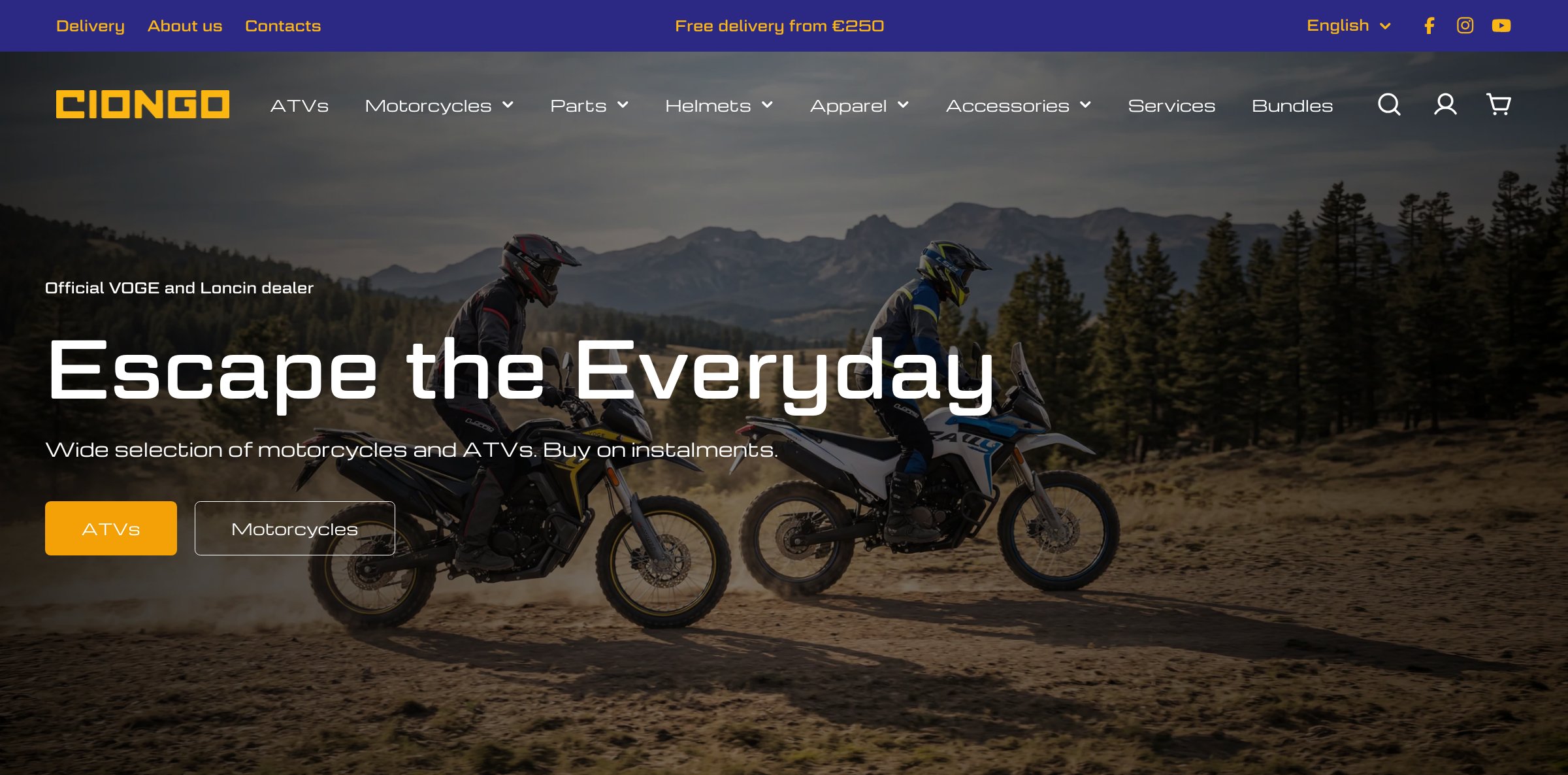
The problem
Ciongo sells motorcycle and ATV parts — around 15,000 of them. They were on Verskis, and the platform had become the limiting factor. The tools they needed didn’t connect to it, so anything they wanted to add had to be custom-built at custom-build prices.
The catalog itself was the harder problem. Product data arrived from several manufacturers, each with their own XML feeds and Excel sheets, each structured differently.
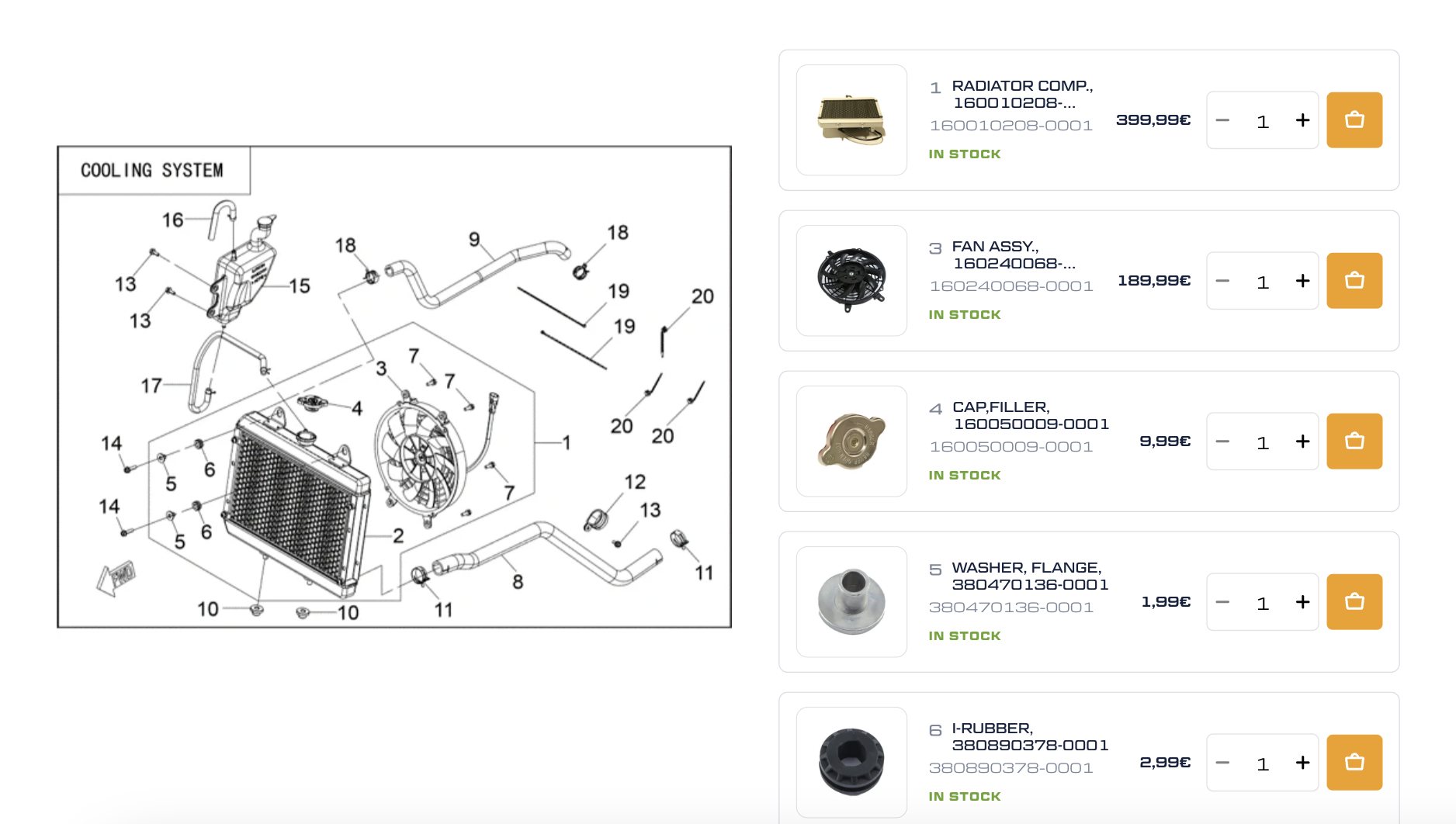
Merging that isn’t a copy-paste job. A part number alone doesn’t tell you which models it fits, and manufacturers number their parts according to their own exploded diagrams. Lose the sequence and the catalog is worse than useless — a customer orders a part that doesn’t fit their machine, and it comes straight back.
What I did
I built a pipeline that joins every source by part number, resolves conflicting prices, applies VAT, and outputs a clean Shopify-ready CSV. One dataset, from feeds that never agreed with each other.
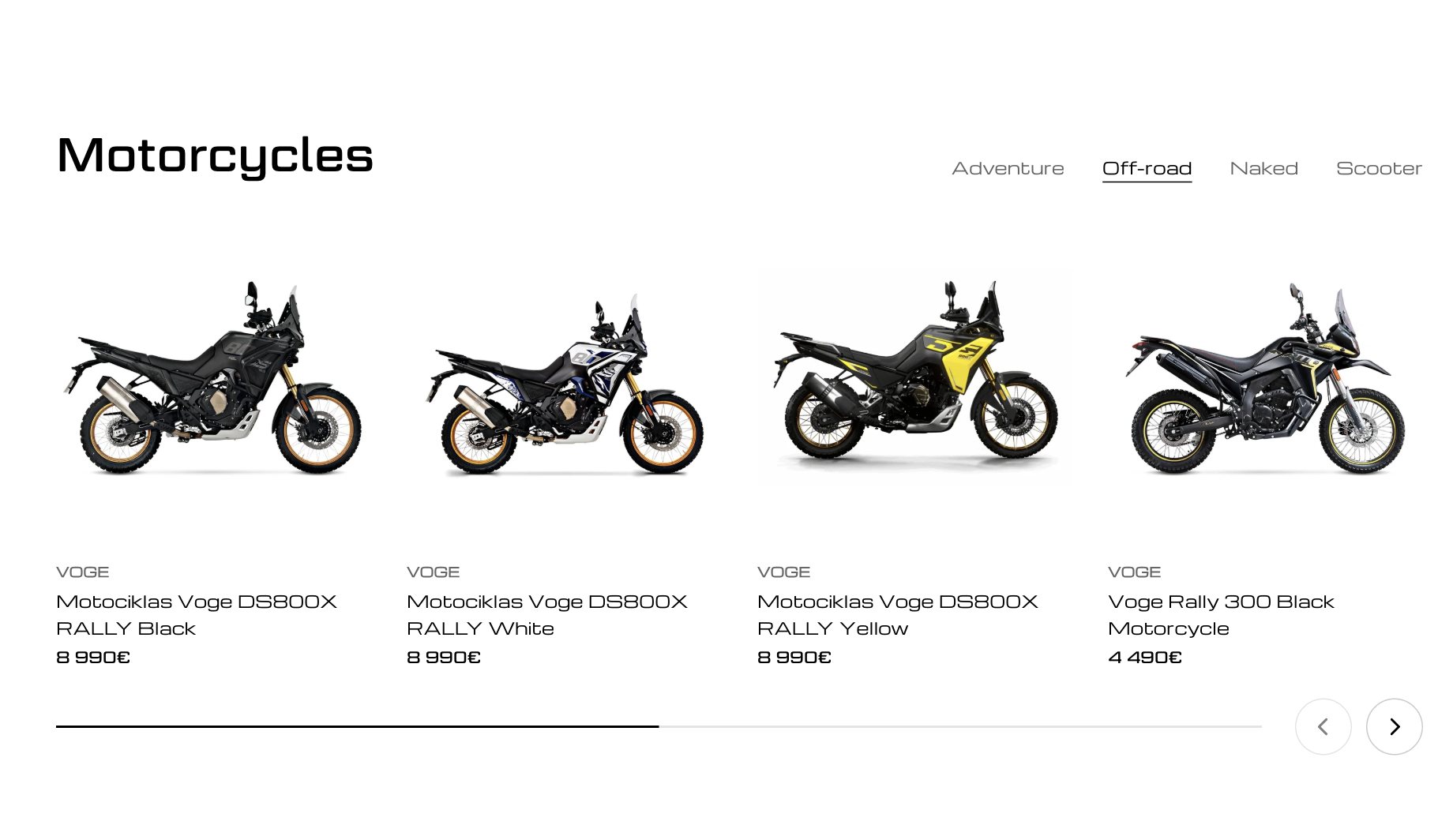
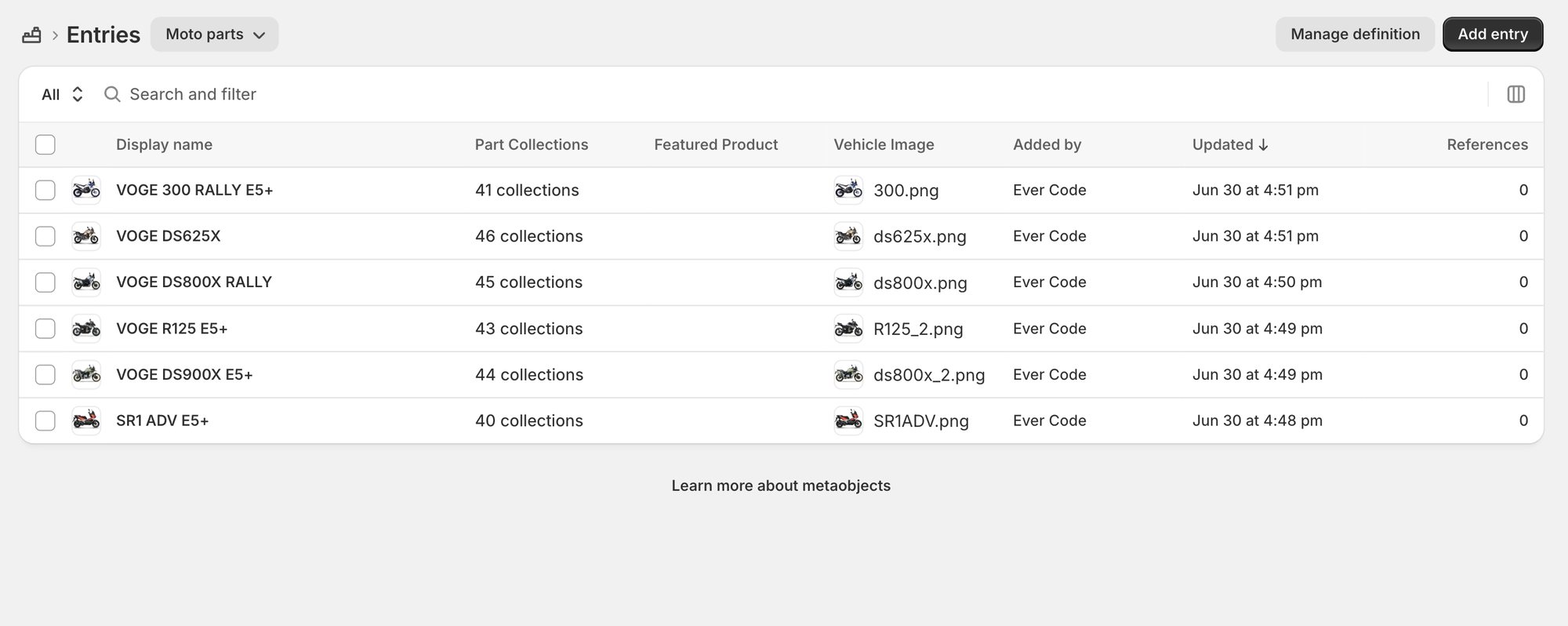
Then the lookup. Every motorcycle and ATV model became a Shopify metaobject, mapped to as many as 52 schema-specific collections, keeping each manufacturer’s own diagram numbering intact. Pick your model, see only the parts that fit it, numbered the way the manufacturer numbers them. Built entirely on native Shopify — no third-party app underneath it, and nothing to subscribe to.
Around it:
- A B2B setup with its own catalogs and forms
- Custom inquiry forms for ATV and motorcycle purchases, and test-ride booking forms
- Financing and installments at checkout
- Odoo ERP connected for accounting and warehouse sync
- Category-specific product templates and responsive size charts
- Collection sorting that surfaces in-stock products first by best-selling and pushes out-of-stock to the bottom — again natively, no sorting app
- Separate landing pages for their buyback and service lines
- Multi-language throughout, plus the full SEO migration: redirects, tags, pixels, analytics
What changed
15,000 products moved without losing which part fits which machine. A catalog their customers can search by model instead of guessing. And no app subscriptions holding any of it up — the parts system is theirs, built into their store.